Safe Sleep

Reduce the risk of SIDS

Here you’ll learn about the essential safe sleep principles that every parent, grandparent and caregiver should know. Our guidelines are simple yet powerful, designed to protect the most vulnerable among us during their most peaceful moments – sleep.


How can I reduce my baby’s risk of SIDS, or a fatal sleep accident?

There are many important measures that you can make to heavily reduce the risk of SIDS, or a fatal sleeping accident. By applying these measures, you’re ensuring a safe sleep environment for your baby.


  • Always lay your baby to sleep on their BACK. Scientific evidence shows that sleeping your baby on their back is the safest, reducing the risk of SIDS or a fatal sleep accident.


  • Once you are confident that your baby can independently roll to their tummy and back to their back at all times, you are safe to allow them to find their own position in sleep. It’s still recommended to place your baby on their back when you first lay them to sleep.


  • Avoid sleeping with your baby on sofas or chairs: These settings increase the risk of accidental suffocation. Always place your baby in a designated sleep space.


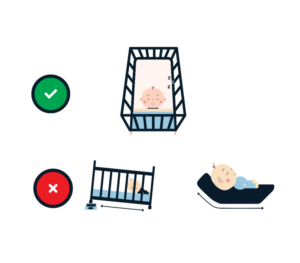
  • Your baby should always be slept on a firm, flat surface that is parallel with the floor of the room they are sleeping in.


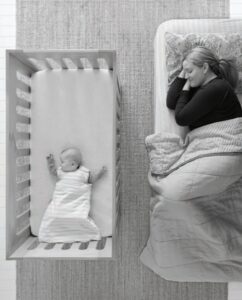
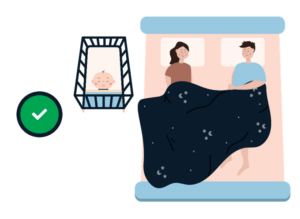
  • The safest option is for your baby to have their own separate sleeping space, such as a cot or bassinet. This dedicated space reduces the risk of accidental suffocation, as it eliminates the chance of an adult or child rolling onto the baby or loose bedding covering their face.


  • Never tilt the surface of your baby’s sleep environment (e.g. to reduce symptoms of colic or reflux). It promotes your baby’s chin to fall to their chest, increasing the risk of kinking their airway and reducing oxygen flow. Your baby should always be slept on a firm, flat surface that is parallel with the floor of the room they are sleeping in.
  • Avoid using baby nests or pods: Baby nests, pods or similar products may appear cozy, but they are not safe. These products often have soft sides or extra padding that can pose suffocation risks, especially if your baby rolls against the sides or buries their face in the padding. Whether your baby is awake or asleep, these products are dangerous for your baby to be in.


  • The safest position for your baby to be slept is on their BACK. Placing your child on their side or tummy significantly increases the risk of SIDS or a fatal sleep accident.


  • Sleeping your baby in a mandatory standard cot (AS/NZS 2172) is highly recommended. It is ideal for your baby to sleep in the parents room for the first 12 months, in their own independent sleep space (cot).


  • Check that the mattress is firm and fits snug with the inside edges of the cot, to avoid creating an entrapment hazard between the inside edge of the cot and the mattress. Entrapment hazards are dangerous for your baby.


  • Never fit an ‘extra’ mattress or padding to your baby’s sleep surface to try and achieve a softer, more comfortable sleep environment. A soft sleep surface is dangerous for your baby.


  • Should you choose to swaddle your baby, it’s vitally important to cease swaddling at the time your baby shows any signs of wanting to roll (whilst awake or asleep). It’s at this stage in development that your baby’s arms must be free (not constrained) when they are placed to sleep.


  • Avoid loose blankets in the cot: Loose blankets can pose a suffocation risk if they cover your baby’s face. If you choose to use a blanket, ensure it is securely tucked in at the foot and both sides of the cot and only reaches up to your baby’s armpits. Alternatively, a well-fitted, size appropriate baby sleeping bag is a safer option, as it is fitted and eliminates the risk of covering the baby’s face.


  • Strongly consider the use of safe baby sleeping bags. It’s important to always ensure the sleep bag is a suitable size for your baby, taking careful note that the neck hole and arm holes are a suitable size, and not too big.


  • Should you choose to use safe baby sleeping bags, it’s vitally important to release your baby’s arms (through the designed arm holes) at the time your baby shows any signs of wanting to roll (whilst awake or asleep). It’s at this stage in development that your baby’s arms must be free (not constrained) whilst they sleep, and the arm holes must be small enough to ensure that your baby can’t independently insert their arm/s inside the baby sleeping bag at any time.


  • Eliminate all suffocation/choking hazards in the sleep environment. No cot bumpers, soft underlays (e.g. sheepskin), hats/bonnets, pillows, soft/plush toys, sleep toys, loose blankets, sleep positional devices.


  • Be cautious with pets. Ensure pets, particularly cats, cannot access your baby’s sleep area. Cats, due to their instinct to seek warmth, may lay on a baby, which could lead to accidental suffocation.


  • Use a dummy during sleep: Using a dummy at sleep time has been shown to reduce the risk of SIDS. If you choose to introduce a dummy, place it in your baby’s mouth at the beginning of sleep time. If the dummy falls out while the baby is asleep, there is no need to reinsert it. Ensure the dummy is clean, and avoid using clips or cords, which can be a strangulation hazard.


  • Prevent overheating: Dress your baby appropriately and maintain a comfortable room temperature. Overheating is a SIDS risk factor, so avoid excessive layers or overly warm environments.


  • Keep your baby’s environment smoke-free: Avoid smoking during pregnancy, and ensure no one smokes around your baby, as secondhand smoke exposure is a significant risk factor for SIDS.


  • Place your baby’s feet at the foot of the cot: This position helps prevent your baby from sliding down under blankets, reducing suffocation risks (if using blankets).


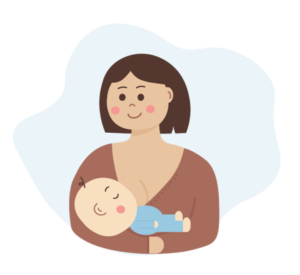
  • Do all you can to breastfeed your baby for as long as possible. Breastfeeding is associated with a lower risk of SIDS.


  • Practice supervised ‘tummy time’ with your baby for short periods of time whilst they are awake, to help develop your baby’s neck and upper body strength. Your baby’s body strength is important in helping them move away from hazardous objects that might affect their airflow.


Alarm based baby monitors

There is currently no peer-reviewed scientific evidence to validate that an alarm-based infant monitor will help save the life of an infant, where the absence of such a monitor would otherwise have resulted in an infant death.

Notwithstanding this, River’s Gift encourage the use of alarm-based monitors during all infant sleep periods, to be used strictly in conjunction with all evidence-based Safe Sleep Practices and Principles.

Additionally, we encourage regular in-person cot-side monitoring and interaction, to complement the use of an alarm-based infant monitor.